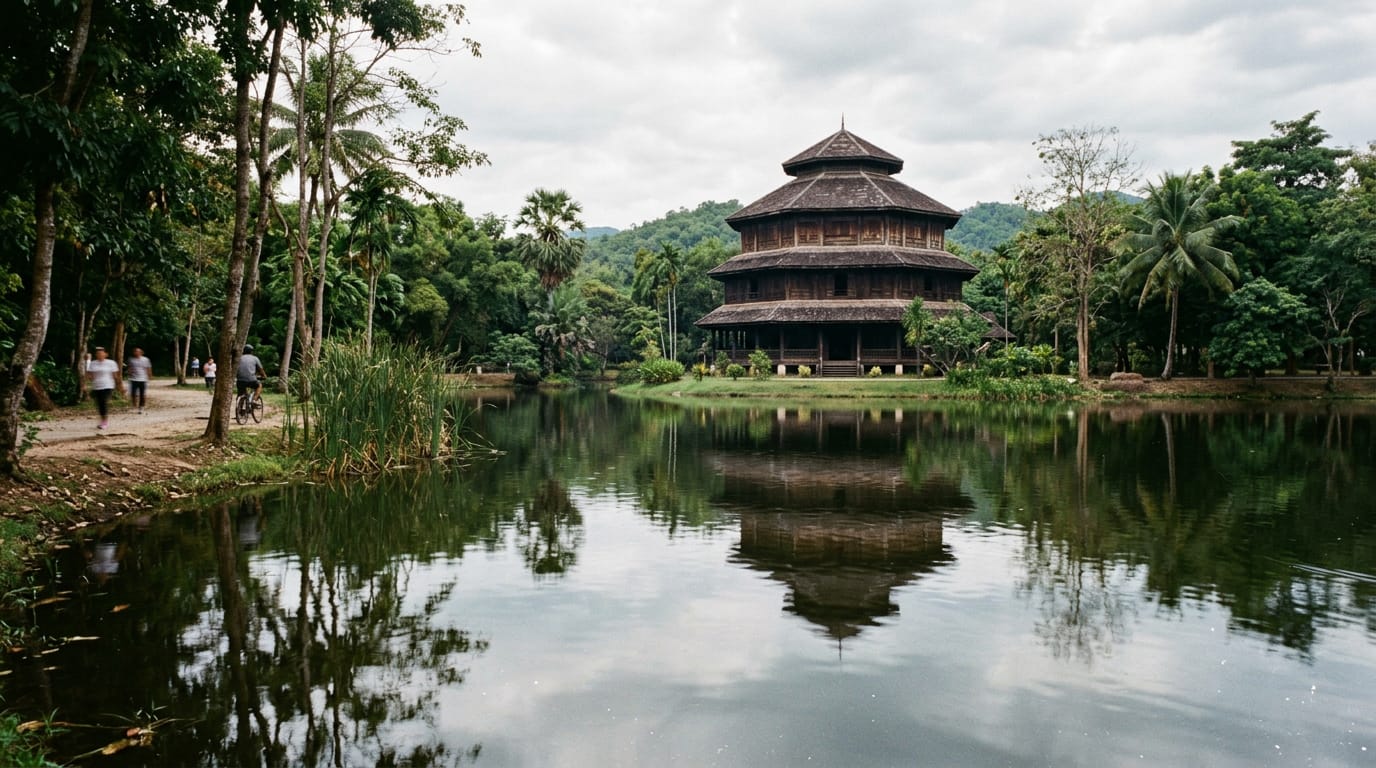
The Tribal Museum is the only public collection in northern Thailand devoted entirely to the six recognised hill-tribe groups — Karen, Lisu, Lahu, Akha, Hmong and Mien. Founded in 1965 as the research arm of the Tribal Research Institute and rehoused in 1997 in a three-storey building overlooking the lake at Rajamangala Lanna Park, it shows traditional costume, ceremonial silver, agricultural tools and ritual dioramas drawn from decades of fieldwork in the hills around Chiang Mai and Mae Hong Son.
Updated
What it is
The Chiang Mai Tribal Museum is the only purpose-built ethnographic collection in northern Thailand devoted to the six hill-tribe peoples officially recognised by the Royal Thai Government as chao khao, literally “hill people”: the Karen, Lisu, Lahu, Akha, Hmong and Mien. It sits on a small headland inside Rajamangala Lanna Park, the large lake park 6 km north of the Old City on Chotana Road, in a three-storey hexagonal building completed in 1997. The museum is operated by the Highland Research and Social Development Institute under Chiang Mai University, the modern successor to the original Tribal Research Institute that founded the collection in 1965.
The displays run by group rather than by theme. Each of the six peoples has dedicated cases on the ground and first floors, covering traditional costume, ceremonial silver, ritual objects, agricultural tools, household furnishings and musical instruments. A research library and temporary-exhibition room occupy the top floor. The strength of the collection is its provenance: almost every object was acquired by the original institute researchers during fieldwork between the 1960s and the 1990s, with full documentation of village, lineage and use.
The museum is one of the most under-visited in Chiang Mai, partly because it sits 6 km outside the Old City, partly because it closes at weekends, and partly because it is free, which removes the marketing imperative. None of these is a reason to skip it. For anyone planning to visit a hill-tribe village, an hour here first transforms what you see.
Collection highlights
Akha and Lisu costume galleries
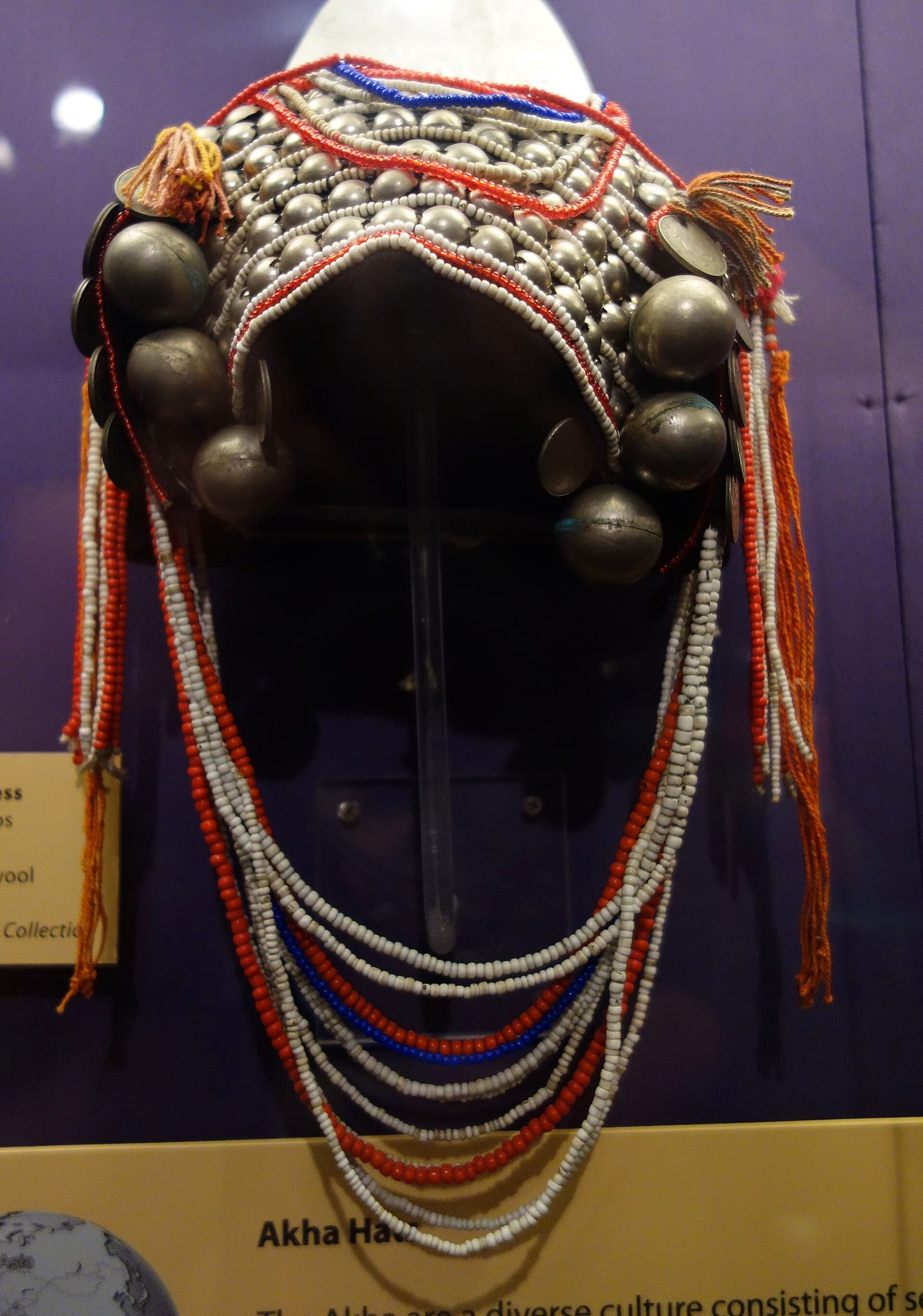
The ground-floor costume galleries are the visual heart of the museum. The Akha cases hold a full set of women’s headdresses, the most elaborate in the highlands of mainland Southeast Asia: silver coins, beads, dyed-chicken feathers and woollen tassels mounted on a conical bamboo frame that can weigh up to 4 kg. A short film loop shows the headdress being assembled. The Lisu cases beside them display the long pleated tunics in turquoise, magenta and emerald cotton that have made Lisu women instantly recognisable in Chiang Mai markets. Cases of festival jackets, breast-plates of silver coins and the small hexagonal embroidered shoulder bags fill the surrounding walls. The labels record the village of origin and the date of acquisition for almost every piece.
Hmong and Mien silver and embroidery
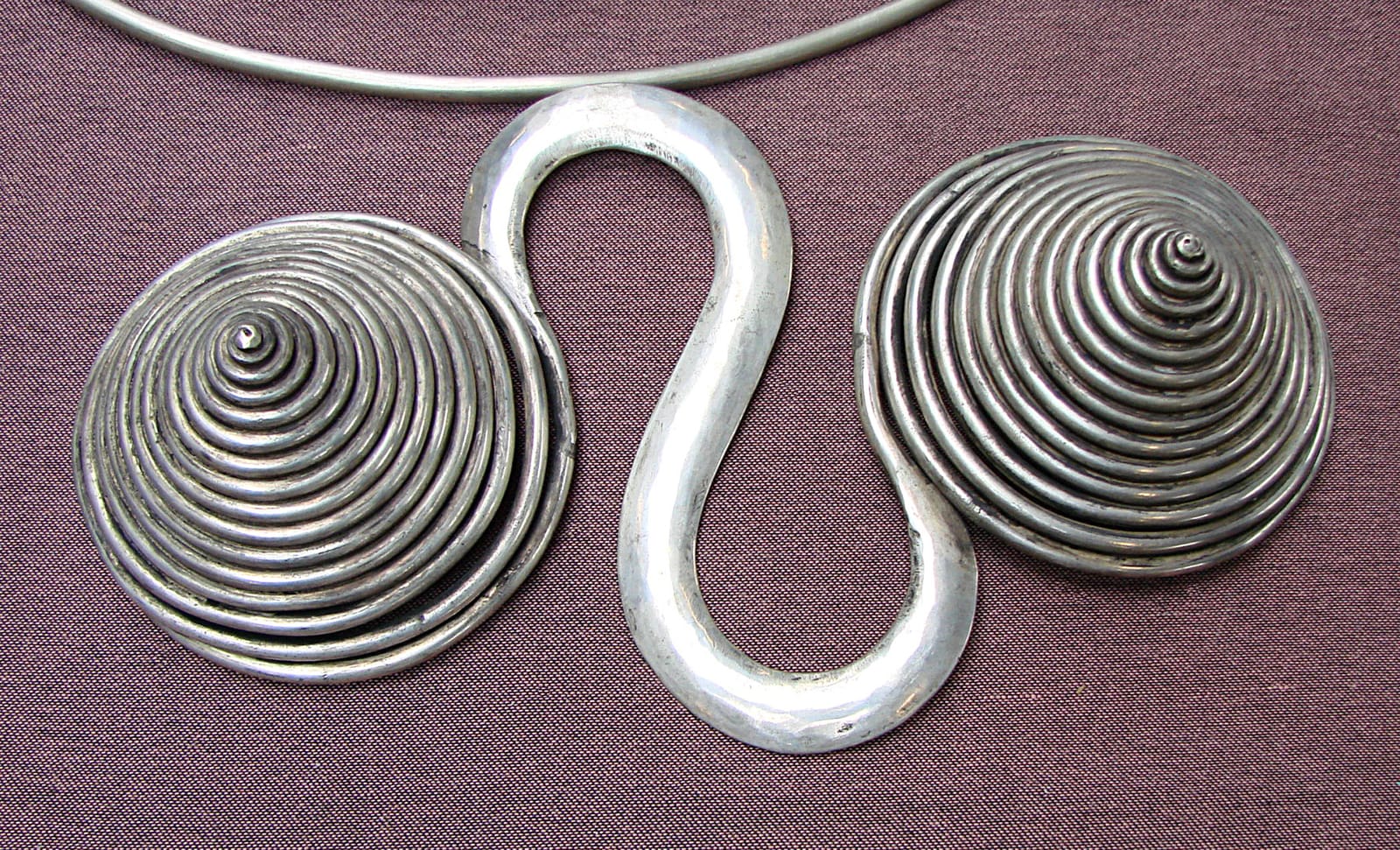
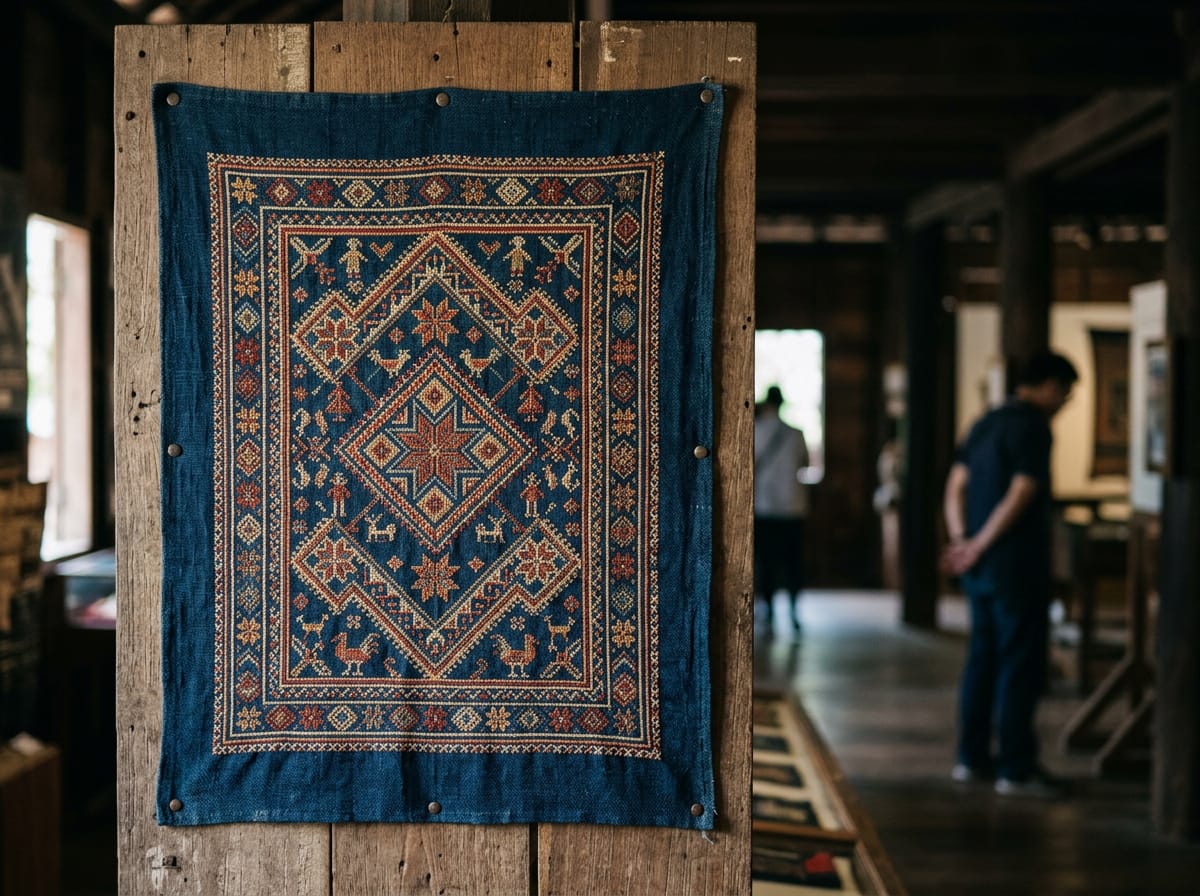
The Hmong and Mien sections lean on the two crafts those peoples are known for across the region: silverwork and embroidery. The Hmong silver cases hold neck rings, chest plates, ear pendants and the heavy braided chains worn at New Year, much of it made by smiths in the Doi Pui and Doi Suthep villages above Chiang Mai. The Mien cases focus on the dense cross-stitch embroidery on indigo cotton that decorates trouser panels, jackets and infant-carrier slings. The patterns are so fine that a single panel could take a senior weaver three months. A mounted comparison panel shows the same motif as it appears in Hmong reverse-applique and Mien cross-stitch, which is the clearest single object lesson on the deep visual differences between the two related groups.
Karen back-strap weaving and Lahu music
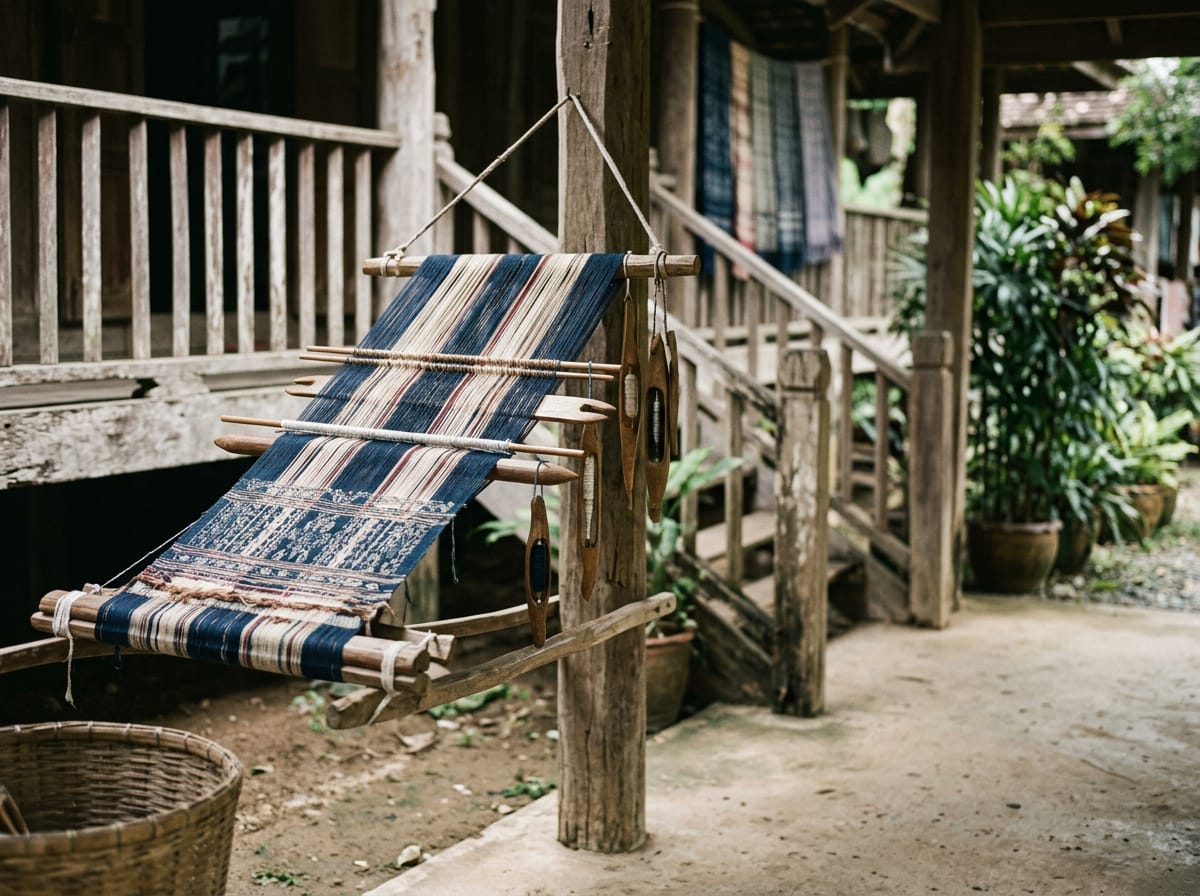
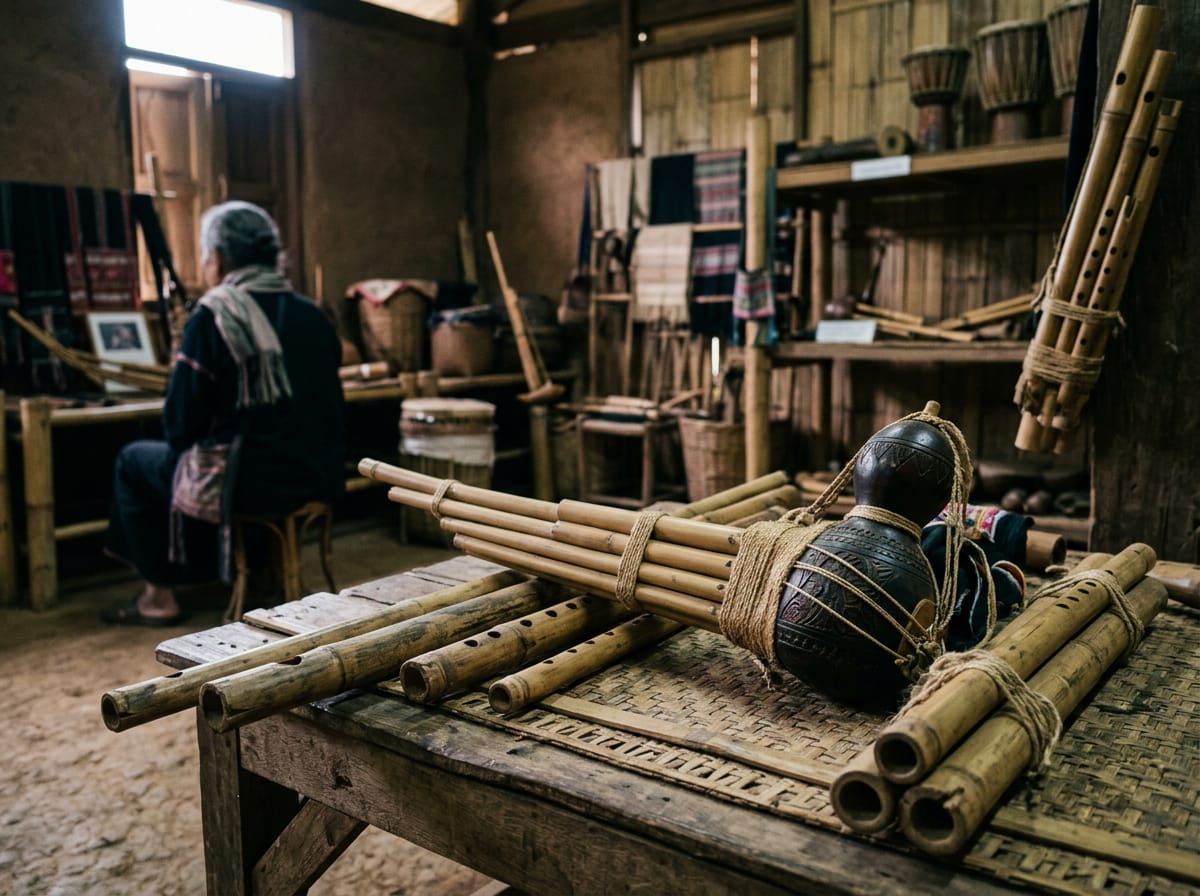
The first floor opens with the Karen gallery, which is anchored by a working back-strap loom set up with a partly woven cloth in natural indigo. Karen weavers traditionally produce on this kind of portable loom strapped between a wall post and the weaver’s lower back, and the museum has set the equipment up so you can see how warp tension is held. A wall of finished blankets and tunics in indigo, white and a deep madder red shows the regional variation between Sgaw and Pwo Karen weaving. The Lahu music room next door holds the free-reed mouth organs called naw, bamboo flutes, jaw harps and small drums, with recordings of harvest and New Year songs that visitors can play through a small console.
Ritual and ceremonial objects
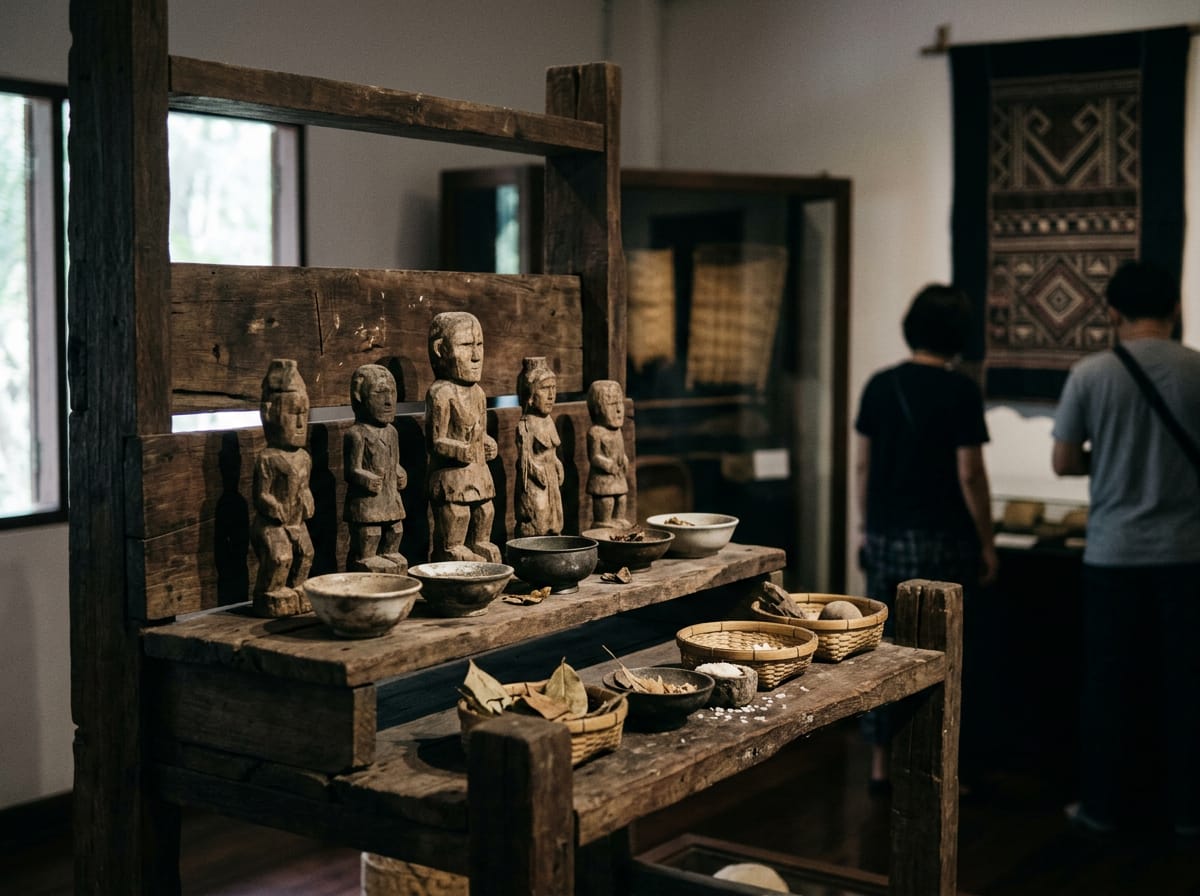
A separate room on the first floor handles ritual material across all six groups. The Akha gateposts known as lkhaw kaw, carved with crude male and female figures and erected at the entrance to a village to keep out malign spirits, are the largest objects in the museum and have their own dedicated alcove. The Hmong shamanic altar with its spirit money and brass bells, the Mien Taoist priest’s painted scroll set, and the Lahu carved wooden ancestor figures sit in adjacent cases. The captions explain the cosmology rather than aestheticising the objects, which is unusual and welcome.
Agriculture and daily life
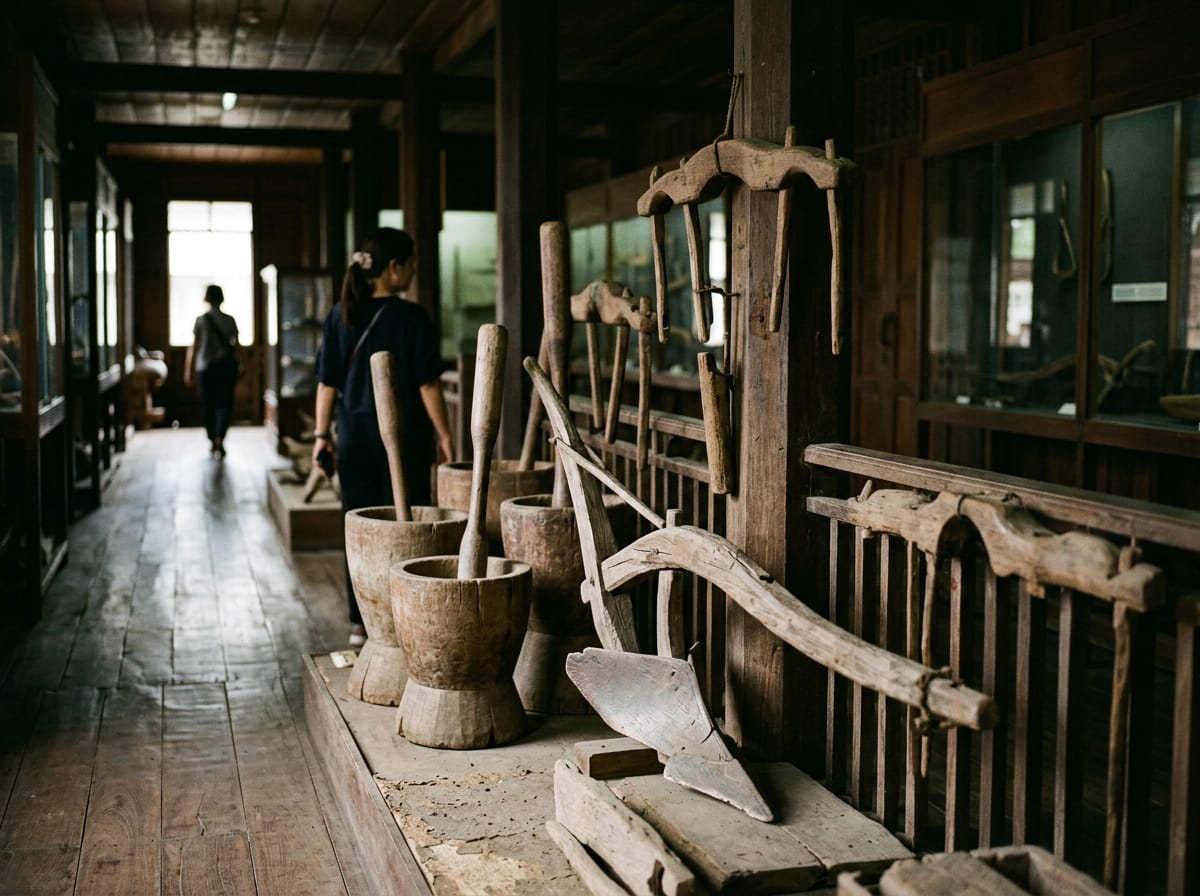
The agricultural-tools gallery on the first floor is the section most often skipped by tourists and most enjoyed by visitors with a rural background. Wooden ploughs, rice pounders, shoulder yokes for water carrying, opium-poppy scoring knives and bamboo storage baskets are arranged by function rather than by ethnic group. A reconstructed Akha hearth shows the central fire arrangement used for cooking, smoking maize and heating water in the same operation. The room ends with a wall of village photographs from the original institute fieldwork between 1965 and 1985, which provide the visual record of pre-development highland life that no longer exists.
History of the institution
The Tribal Museum traces directly to the Tribal Research Institute, founded in 1965 with funding from the Royal Thai Government and the United Nations as a research and policy arm for the integration of highland populations into the Thai state. The institute carried out the first systematic surveys of the six groups, producing the bilingual Thai-English monograph series that remains the foundational ethnography of the region. The original collection grew out of these field expeditions as researchers brought back representative material from the villages they studied.
For the first thirty years the collection was housed in a cramped wooden building on Huay Kaew Road near the university campus, with limited public access. A new purpose-built museum was funded in the early 1990s as part of the Rajamangala Lanna Park development, the green-space project commissioned to mark King Bhumibol’s golden jubilee in 1996. The current three-storey building opened in 1997 with a hexagonal floor plan designed by the Faculty of Architecture at Chiang Mai University.
Administrative reorganisation in 2002 dissolved the original institute and transferred the collection to the newly created Highland Research and Social Development Institute under Chiang Mai University, which has run the museum since. A major label refresh and lighting upgrade was completed in 2010. The research library on the top floor remains the most comprehensive English-language collection on the highland peoples in northern Thailand.
Visiting tips
Photography without flash is permitted throughout; flash will bring a polite intervention from the attendants because the natural dyes on the costumes fade under bright light. Tripods are not allowed in the galleries but the terrace overlooking the lake makes a good substitute. The building is air-conditioned but the temperature is kept high to conserve textiles, so a light layer is sensible. A printed English pamphlet is free at the front desk. The museum shop on the ground floor sells genuine hill-tribe textiles and silver at prices that return to producer co-operatives; the markup is honest. There is no café inside the museum; the lakeside café 300 metres away in the park serves coffee, juices and noodle soups until evening. Wheelchair access is good on the ground floor and via lift to the upper floors when the lift is working.
Best time to visit
Weekday mornings between 09:00 and 11:00 are the quietest and best-lit. Avoid Mondays after a long holiday weekend when the staff sometimes use the morning for cleaning. The cool season from November to February makes the lake park walk genuinely pleasant and the temperatures inside the air-conditioned galleries comfortable; the hot season from March to May is uncomfortable outdoors and the walk back across the park to the museum entrance can be punishing in the afternoon sun. The rainy season from June to October brings short heavy showers that pass within an hour and rarely affect the visit; the museum makes a good place to sit out a downpour. Remember the unusual weekday-only schedule: the museum is closed on Saturdays, Sundays and all public holidays. Songkran, the Thai New Year water festival in mid-April, closes the museum entirely for four days, and the Chiang Mai Flower Festival weekend in early February is busy in the park outside but does not affect access to the museum itself.
Nearby and combine with…
The natural pairing is with the Chiang Mai National Museum 3 km south on the Superhighway, which covers Lanna and lowland history that the Tribal Museum largely omits. Both can be done in a single morning if you start at 09:00. For visitors who want to follow the museum with a living-village encounter rather than another collection, the Hmong villages in Mae Sa Valley 25 km north-west are the closest accessible highland communities and the ones whose material is best represented in the Tribal Museum cases. The park itself rewards an hour’s walk around the lake before or after the visit.
Photos
Frequently asked questions
What are the opening hours of the Tribal Museum?
The museum is open Monday to Friday only, 09:00 to 16:00, with last entry at 15:30. It is closed every Saturday and Sunday, on national public holidays and on the four days of Songkran in April. The weekday-only schedule is unusual for a Chiang Mai museum and catches a lot of visitors out, so confirm the day before. Staff occasionally close galleries on the upper floors for cleaning between 12:00 and 13:00.
How much is the entry fee?
Entry is free for everyone, regardless of nationality, age or student status. A donation box sits beside the ticket desk and the suggested contribution is 50 to 100 baht per visitor, used to fund acquisition and conservation. A small shop on the ground floor sells hill-tribe textiles, silver jewellery and printed catalogues with profits going to producer co-operatives in the villages.
Where is the Tribal Museum and how do I get there?
The museum sits inside Rajamangala Lanna Park, also called Suan Ratchamangkhala, the large lake park 6 km north of the Old City on Chotana Road. From Tha Phae Gate a red songthaew costs 50 to 60 baht per person and takes 20 minutes; a Grab car runs 120 to 150 baht. Tell the driver Suan Ratchamangkhala or Tribal Museum — both names are recognised. Free parking is available inside the park about 200 metres from the building.
Which hill-tribe groups are covered?
The museum covers the six groups officially recognised by the Royal Thai Government as chao khao — Karen (Pgaz K'Nyau), Lisu, Lahu, Akha, Hmong and Mien (Yao). Each group has its own dedicated section across the three floors. The collection is strongest on Akha and Hmong material, reflecting the original research focus of the Tribal Research Institute in the 1960s. The Karen sections were expanded in the 2010 refresh.
Is there English signage?
Yes. Every major case has bilingual Thai and English labels, and the introductory panels at the start of each floor carry the same in both languages. The detail captions on smaller objects in the silver and ceremonial rooms are sometimes Thai only. There is no audio guide, but a printed English visitor pamphlet is available free at the entrance and is worth picking up.
How long should I spend at the museum?
Allow 60 to 90 minutes for the three floors. The ground floor covers costume and silver and is the most visually striking. The first floor handles ritual, music and agriculture. The top floor is the research library and a small temporary-exhibition room, often the least visited but the most rewarding for anyone with a serious interest. Add another hour if you want to walk around the lake, which has shaded paths and a small café on the far side.
Can I take photographs inside?
Photography without flash is permitted throughout. Flash is banned because of the textile dyes, which are mostly natural indigo and madder and fade quickly under bright light. Tripods are not allowed in the galleries but can be set up on the terrace overlooking the lake. Filming for commercial use requires written permission from the museum office, applied for at least two weeks in advance.
Is there a café or shop?
A small museum shop on the ground floor sells genuine hill-tribe textiles, silver jewellery, baskets and printed catalogues at prices that go back to producer co-operatives. There is no café inside the museum, but a casual lakeside café about 300 metres away in the park serves coffee, fresh juices, noodle soups and Thai snacks daily until 18:00. The park itself is a popular jogging and picnic spot for Chiang Mai residents.
Is the museum suitable for children?
The Tribal Museum is one of the better Chiang Mai museums for older children. The scale dioramas of village life, the costume mannequins with their elaborate silver headdresses, and the agricultural-tools room with its wooden ploughs and rice pounders all hold attention. Younger children may struggle with the longer captions but enjoy the lake park immediately outside, which has open lawns, a playground and shaded paths.
Is the museum wheelchair accessible?
The ground floor is fully accessible by a ramp at the side entrance. A lift serves the first and second floors, although it is sometimes out of order — check at the front desk on arrival if this matters. The lakeside paths in the surrounding park are flat and paved. The museum itself rates moderate on accessibility; the park rates excellent.
What is the difference between this museum and a hill-tribe village tour?
The Tribal Museum is the contextual primer; a village visit is the encounter. The museum explains who the six groups are, where they originated, how their material culture differs and what their rituals signify, in a calm scholarly setting. A village tour shows you the living reality but rarely gives the historical and linguistic context. The pairing that works best is the museum first, a Hmong or Lisu village in Mae Sa Valley second.
Related guides
Museum
Chiang Mai National Museum
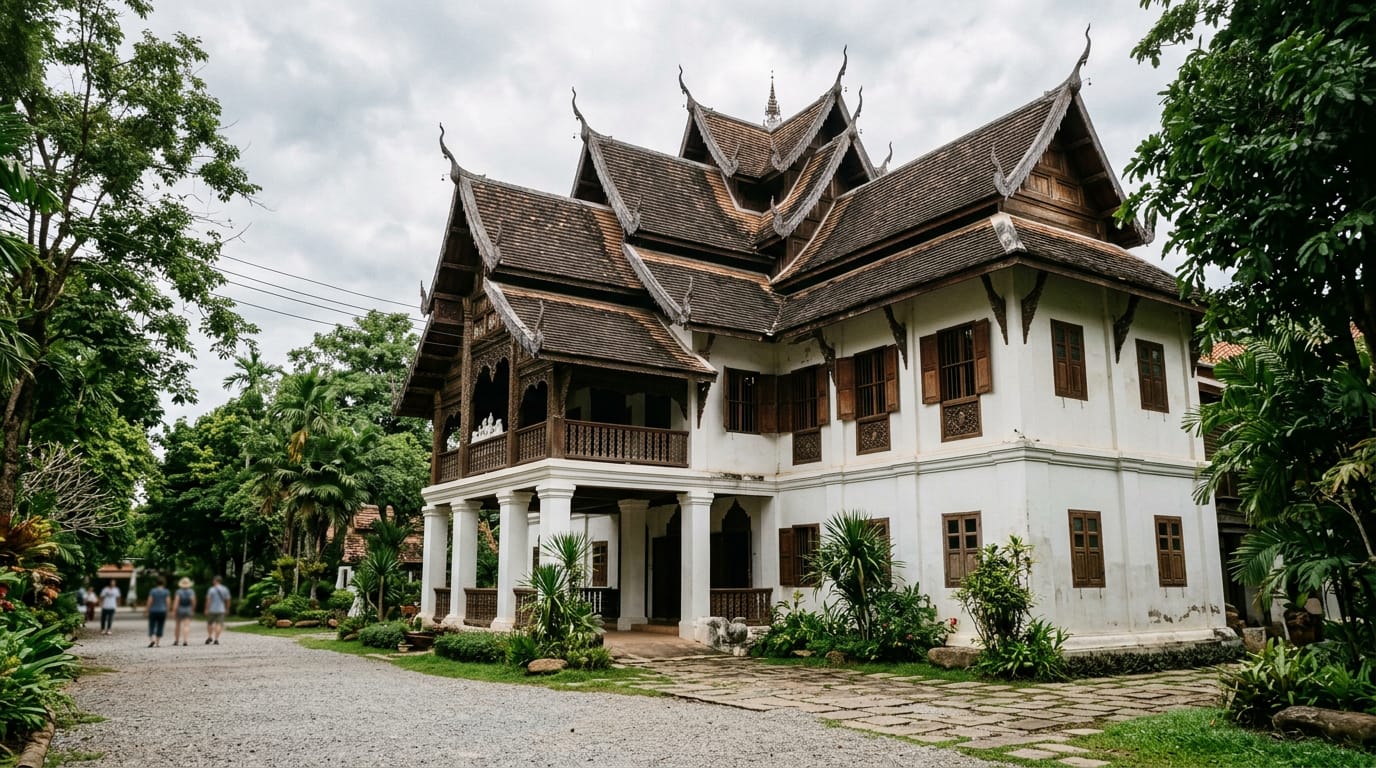
The Chiang Mai National Museum is the principal state collection for northern Thailand, housed in a purpose-built Lanna-influenced hall opened in 1973 under the Fine Arts Department. Its galleries run from Ban Chiang prehistoric pottery through Hariphunchai bronzes and the full sweep of the Mangrai dynasty to the modern royal regalia of the Chiang Mai ruling house. The building sits on the Superhighway north of the Old City, next door to Wat Jed Yod.
Sight
Mae Sa Valley
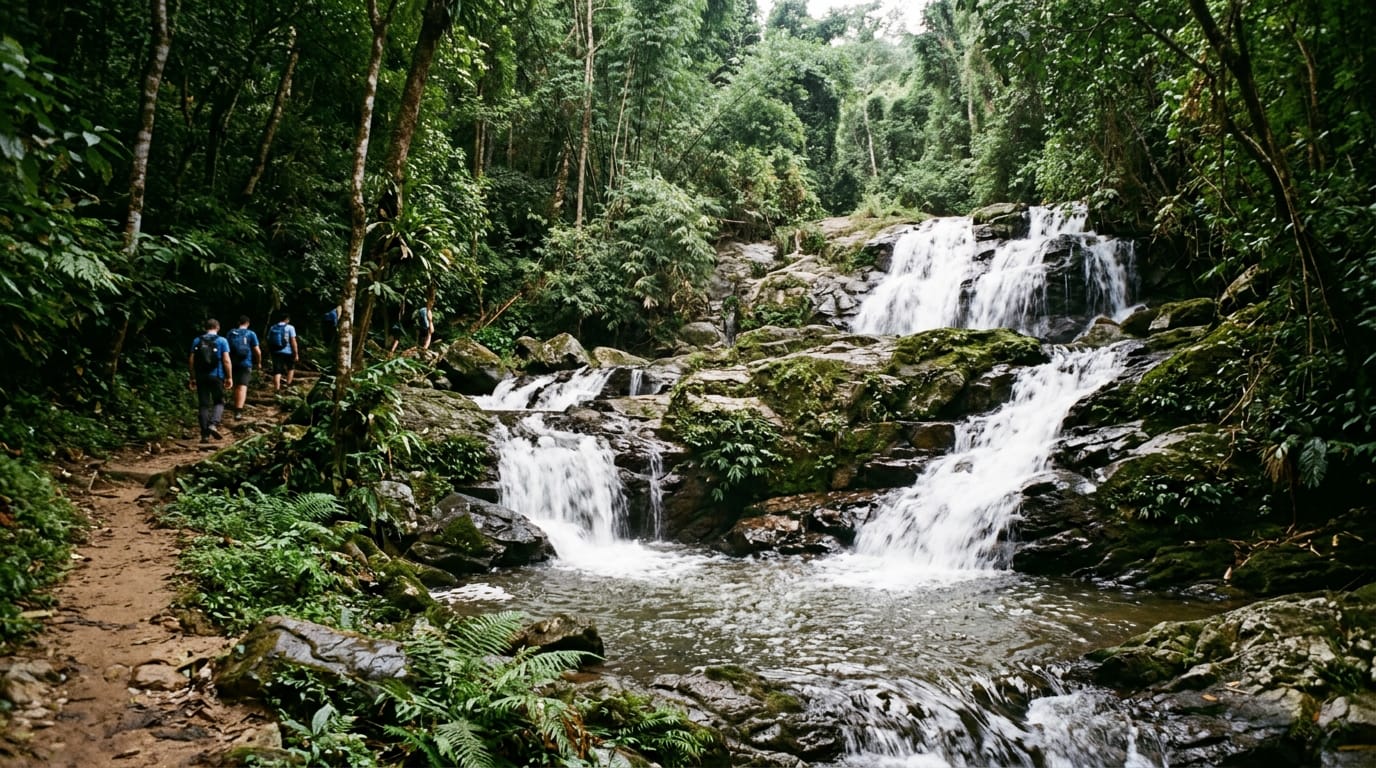
Mae Sa Valley is the green corridor that runs north-west of Chiang Mai along Route 1096, the first leg of the Samoeng loop. The 30 km stretch packs in a ten-tier waterfall, orchid farms, a botanic garden, ziplines and ethical elephant sanctuaries — most notably Elephant Nature Park, the country's best-known refuge for retired working elephants.