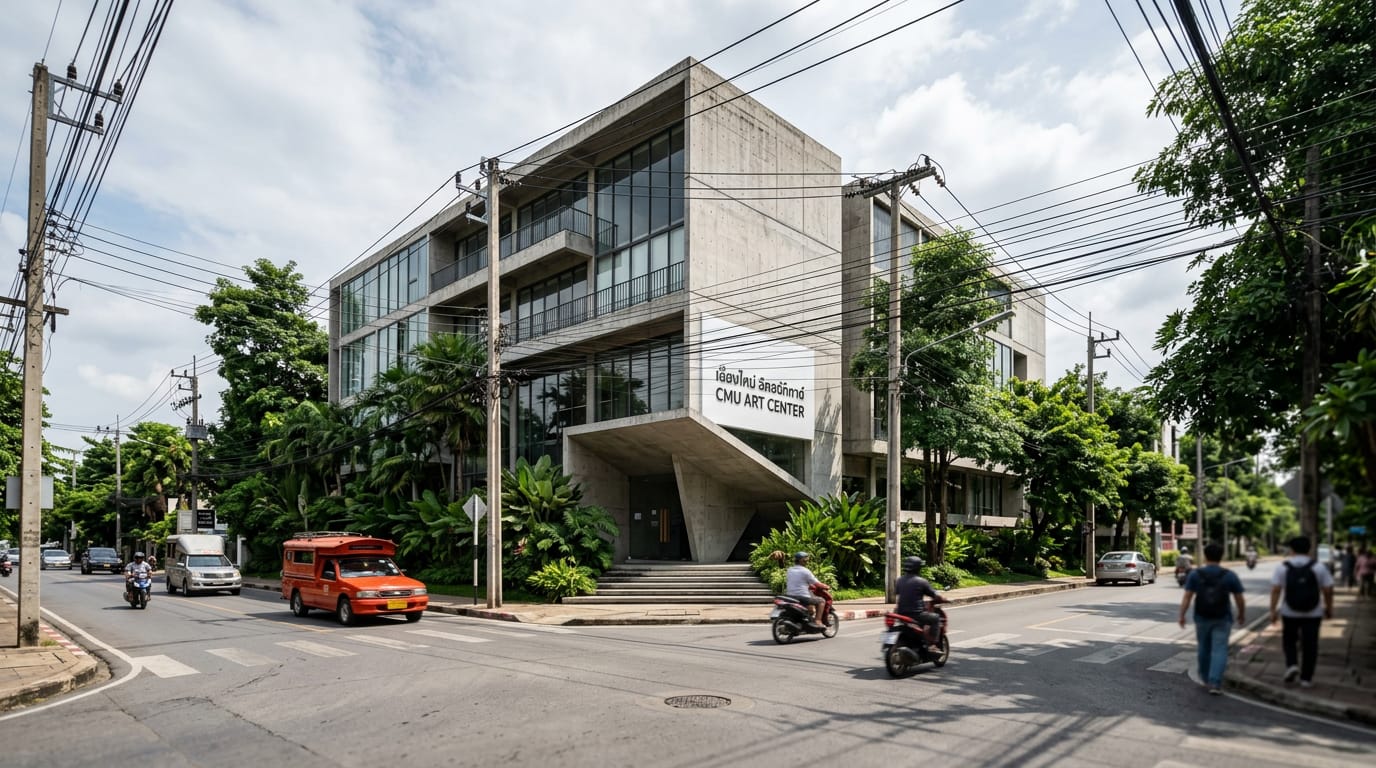
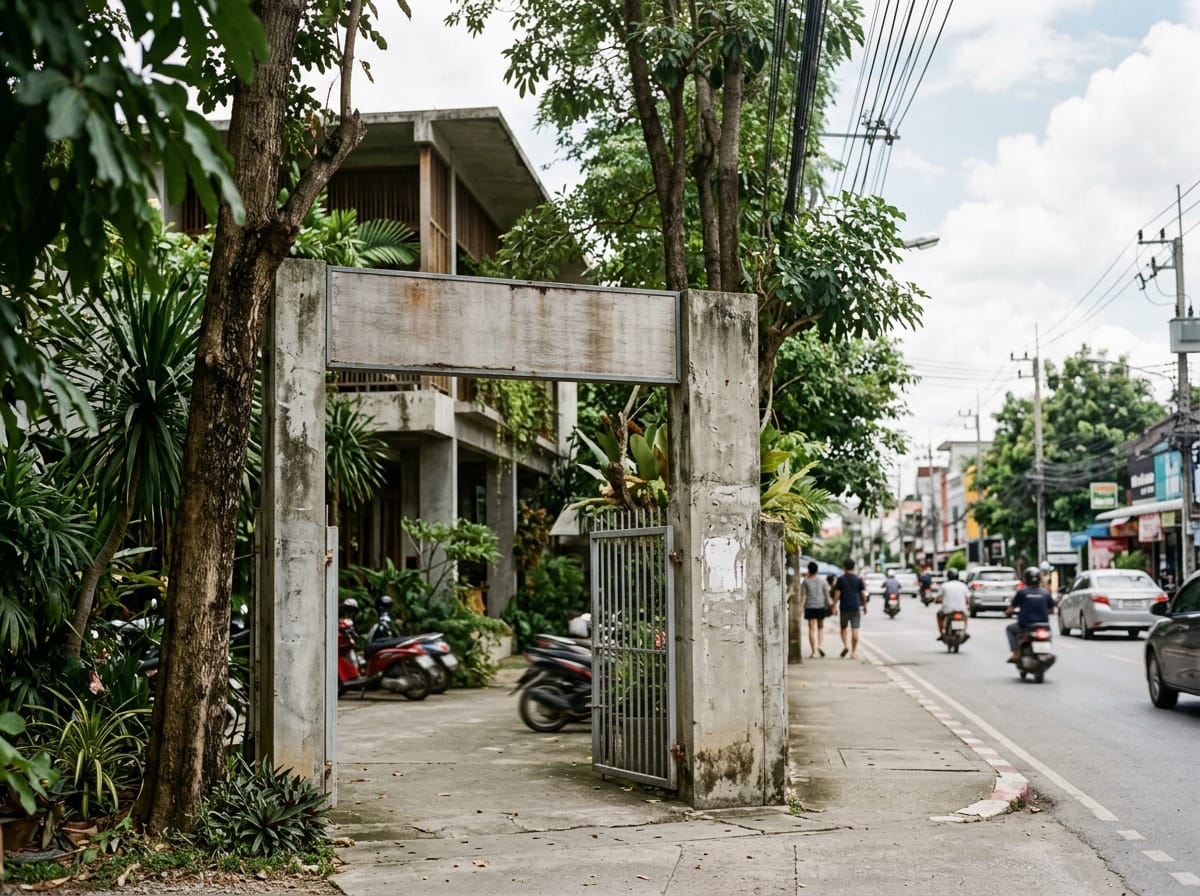
The Chiang Mai University Art Centre, on the corner of Nimmanhaemin and Suthep Road at the south edge of the CMU campus, is the principal contemporary art space in northern Thailand. Founded in 1994 by the Faculty of Fine Arts, it runs a rotating programme of three to five exhibitions a year drawn from regional Thai contemporary practice, broader Asian contemporary art and faculty curatorial projects. Free entry, modernist concrete and glass building, walking distance from every Nimman café.
Updated
What it is
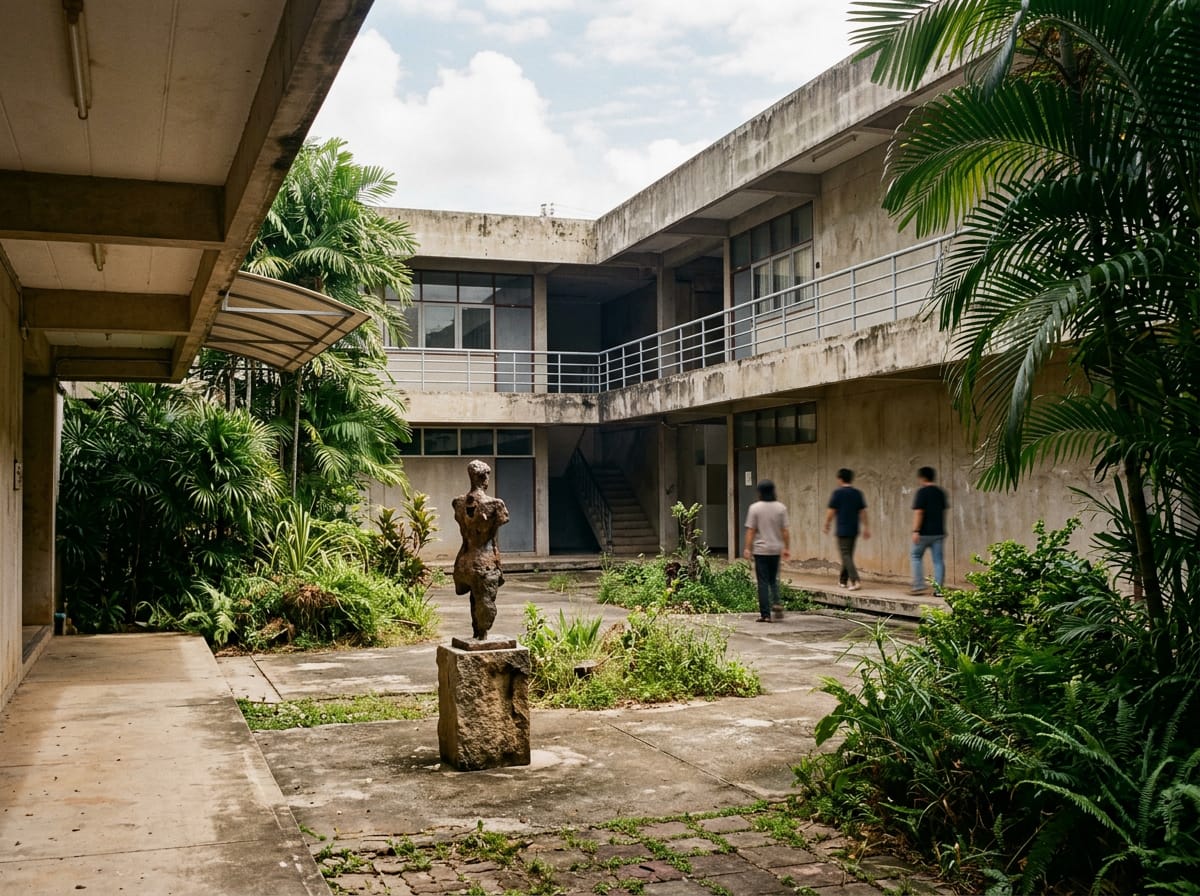
The Chiang Mai University Art Centre, usually abbreviated CMU Art Centre and sometimes signposted as the CMU Art Museum or the Faculty of Fine Arts Museum, is the principal contemporary art space in northern Thailand. It occupies a low concrete and glass building at the south-west corner of Nimmanhaemin (the road that anchors Chiang Mai’s café and gallery district) and Suthep Road, on the immediate south edge of the main CMU campus. The Centre is operated by the Faculty of Fine Arts as an academic exhibition space rather than as a tourist museum, which is why entry is free, the bookshop is small and the programme is announced primarily through the Faculty’s social media rather than through the city’s tourist channels.
The Centre runs three to five exhibitions a year, each two to three months long. The mix combines solo shows by established northern Thai contemporary artists, group thematic exhibitions on regional subjects, faculty curatorial projects on the recent art history of the upper north, graduation shows from the Bachelor and Master programmes in May and December, and occasional touring exhibitions from foreign cultural institutions including the Japan Foundation, the Goethe Institut and the Italian Embassy’s cultural arm. The level of work shown is consistently the highest available to the public in Chiang Mai outside the private commercial galleries on Nimman Soi 17.
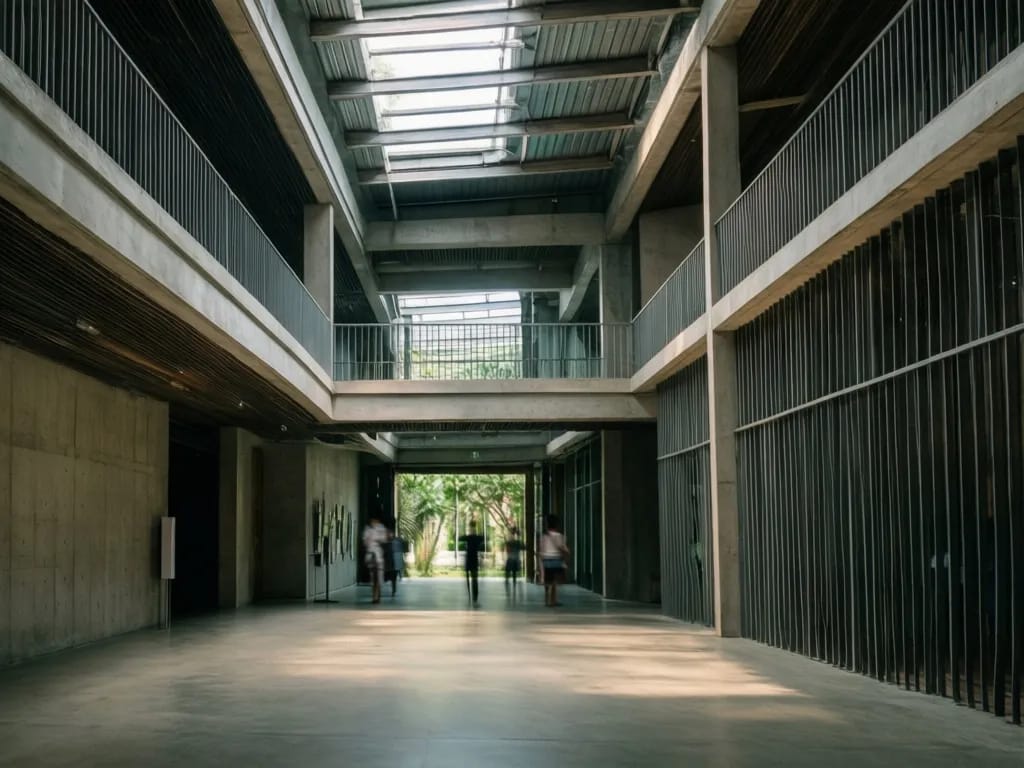
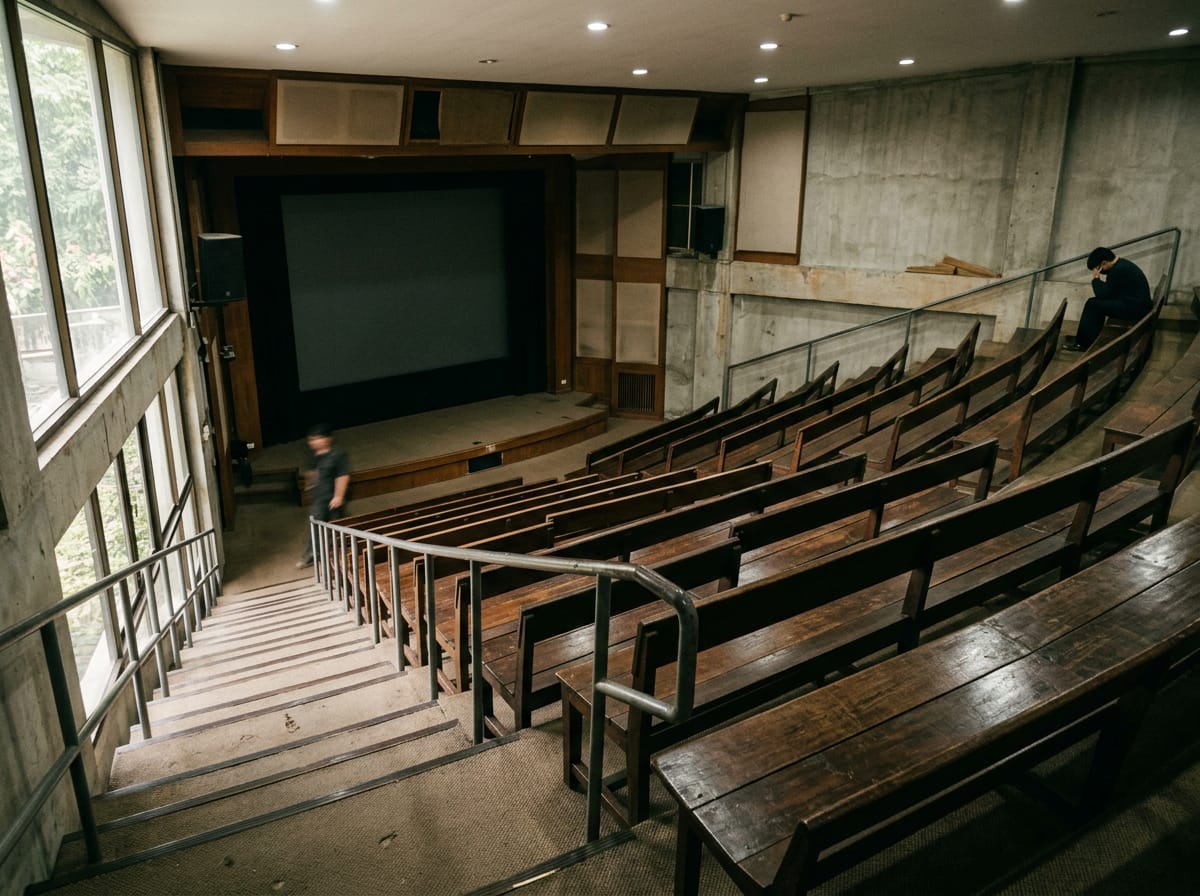
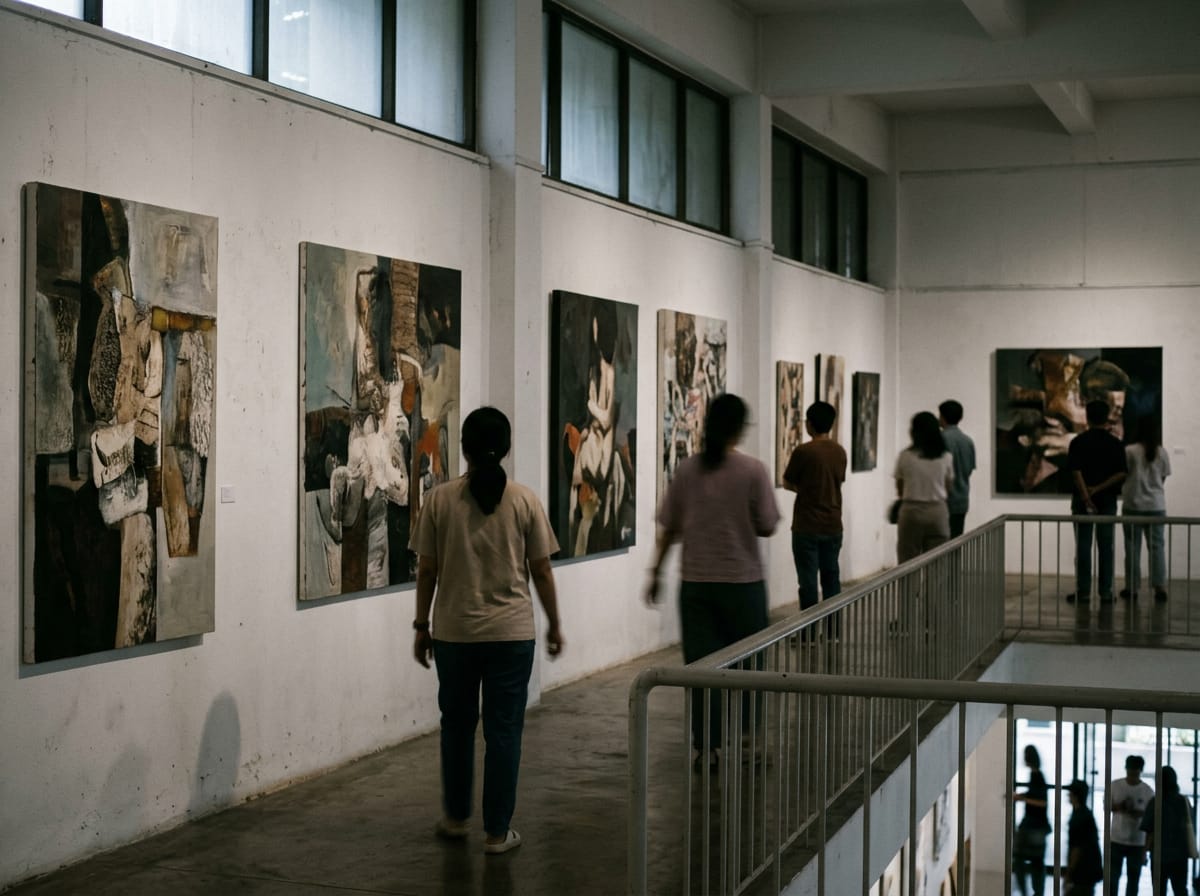
The building itself is worth the short walk from Nimman even between exhibitions. The two main galleries are double-height concrete-walled spaces with overhead lighting; the side rooms include a lecture hall with raked seating used for artist talks and a small open courtyard between the wings.
Collection highlights
Permanent collection and Faculty holdings
The Centre does not maintain a permanent collection in the conventional museum sense, but the Faculty of Fine Arts holds a substantial archive of works acquired since the Centre opened in 1994: pieces purchased from graduating Bachelor and Master students, donated works from faculty members on retirement, and gifts from artists who have had solo exhibitions at the Centre. A selection of around forty works from this archive is rotated through the small permanent-display gallery on the ground floor, refreshed every six months. The selection leans towards painting and works on paper from the 1990s and 2000s and is the most reliable way to see northern Thai contemporary practice when no temporary exhibition is on. The Faculty has slowly digitised its full holdings, and a search terminal in the gallery allows visitors to browse the archive.
Rotating exhibitions of contemporary Thai art
The strongest single feature of the Centre is the rotating exhibition programme. Recent years have included solo shows by established Chiang Mai contemporary artists including Mit Jai Inn, the abstract painter and former Land foundation member; Araya Rasdjarmrearnsook, the conceptual video artist; and Kamin Lertchaiprasert, the Buddhist-influenced sculptor and co-founder of the 31st Century Museum at Mae Rim. Group shows draw widely from the northern art community, with regular thematic exhibitions on craft and contemporary practice, on environment and ecology, on Buddhist iconography in contemporary work, and on the relationship between Chiang Mai and the wider Mekong region.
Asian contemporary art and touring exhibitions
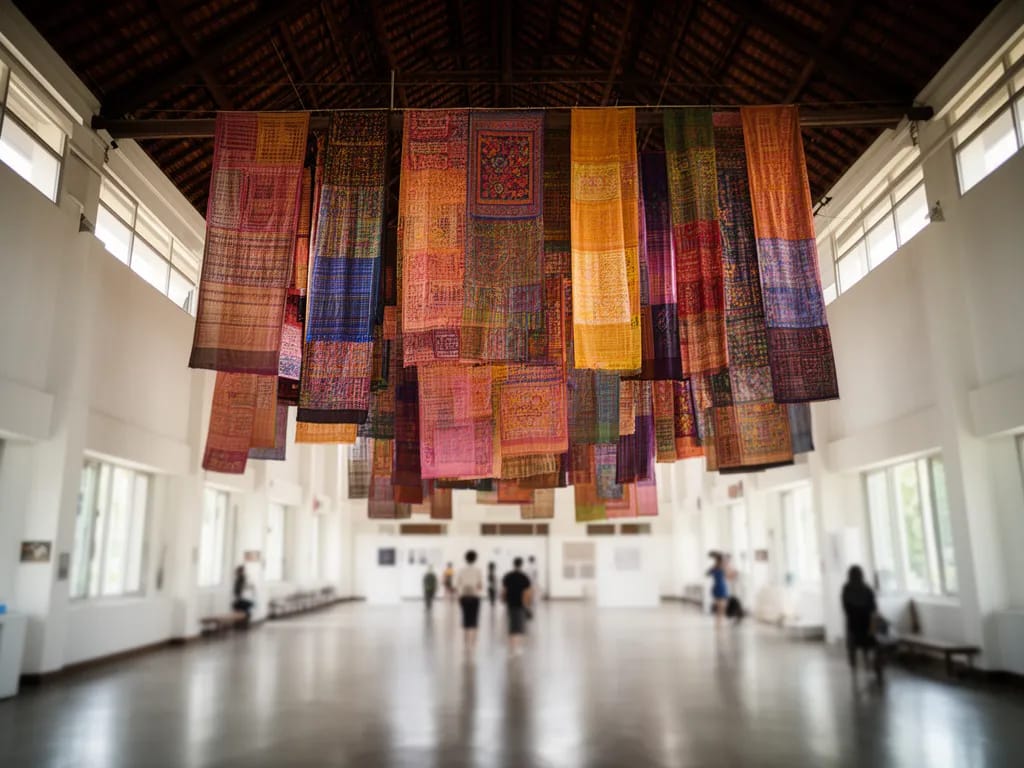
A second strand of the programme draws on touring exhibitions from foreign cultural institutions, particularly the Japan Foundation Bangkok and the Goethe Institut. These shows usually open in Bangkok at the Bangkok Art and Culture Centre and travel north for a six-week run at CMU. Subjects have included contemporary Japanese print-making, German post-reunification photography, Korean ceramics and Indonesian textile art. The touring exhibitions are the principal channel through which contemporary art from outside Thailand reaches Chiang Mai audiences, and they consistently draw the largest visitor numbers.
Faculty graduation shows
The Bachelor and Master graduation shows in May and December are the most accessible exhibitions on the calendar and the most rewarding for visitors with a general rather than specialist interest. Up to a hundred works across painting, sculpture, photography, video, installation and applied arts fill the entire building. The work is uneven by definition, since these are students at the end of their training rather than established artists, but the energy and range make the graduation shows the liveliest visit of the year. Many subsequently established Chiang Mai artists exhibited first as graduating students here.
Photography and archival projects
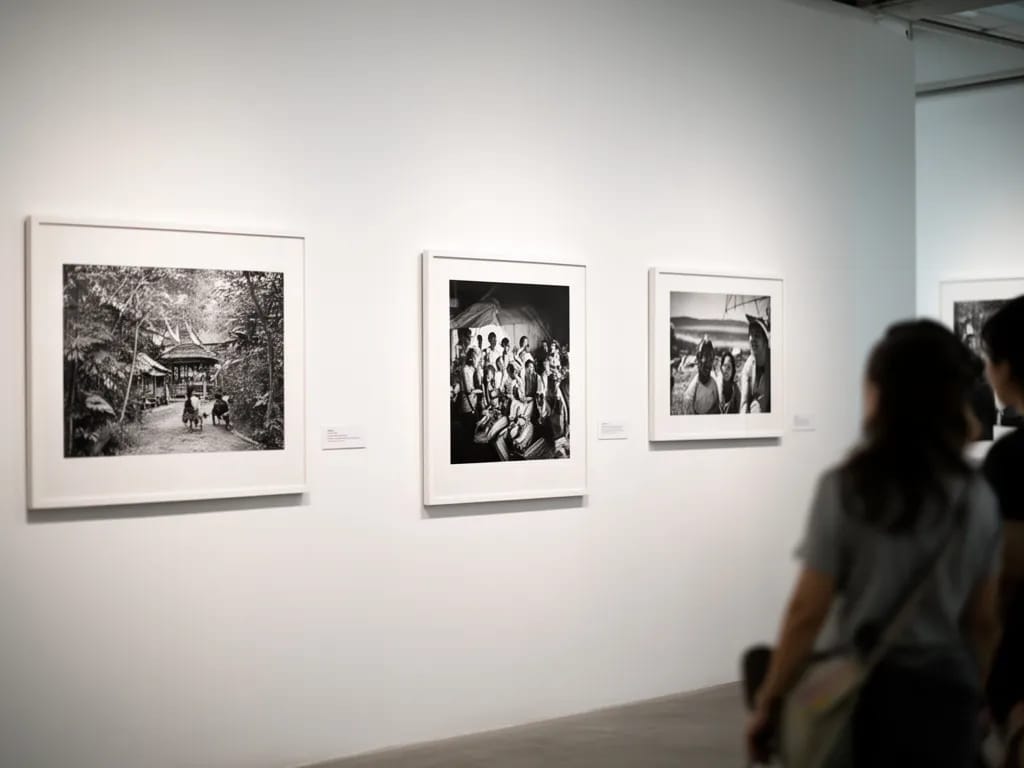
A side gallery is usually devoted to a smaller photographic exhibition running in parallel with the main show. Recent subjects have included documentary photography of hill-tribe villages in the 1970s drawn from the Tribal Research Institute archive, contemporary urban photography of Chiang Mai’s changing neighbourhoods, and faculty-curated retrospective shows of established northern photographers. The photography programme has been the quiet strength of the Centre over the past decade and is the part of the schedule most worth keeping an eye on.
History of the institution
The CMU Art Centre was founded in 1994 by the Faculty of Fine Arts, which had itself been established at Chiang Mai University in 1982 as one of the first dedicated fine art faculties outside Bangkok. The original premises were a converted teaching studio inside the main faculty building on the central campus, with limited public access and no purpose-designed exhibition space. The decision to build a separate public-facing centre on the south edge of the campus, with its main entrance on Nimmanhaemin rather than inside the university grounds, was a deliberate move to bring the Faculty’s exhibition programme out of the academic enclosure and into the city.
The current building, designed by the Chiang Mai architect Chulathat Kitibutr in a stripped concrete-and-glass modernist idiom, opened in stages between 1994 and 1996. The original ground-floor galleries were joined by the upper-floor gallery and the lecture hall in a 2002 extension. A further refurbishment in 2014 added the courtyard wing, the photography gallery and the bookshop. The Centre did much to establish Chiang Mai as the second city of Thai contemporary art after Bangkok; the cluster of private galleries on Nimmanhaemin and Suthep grew up around it through the 2000s. Many of the city’s commercial gallery owners passed through the Faculty as students or teachers.
Visiting tips
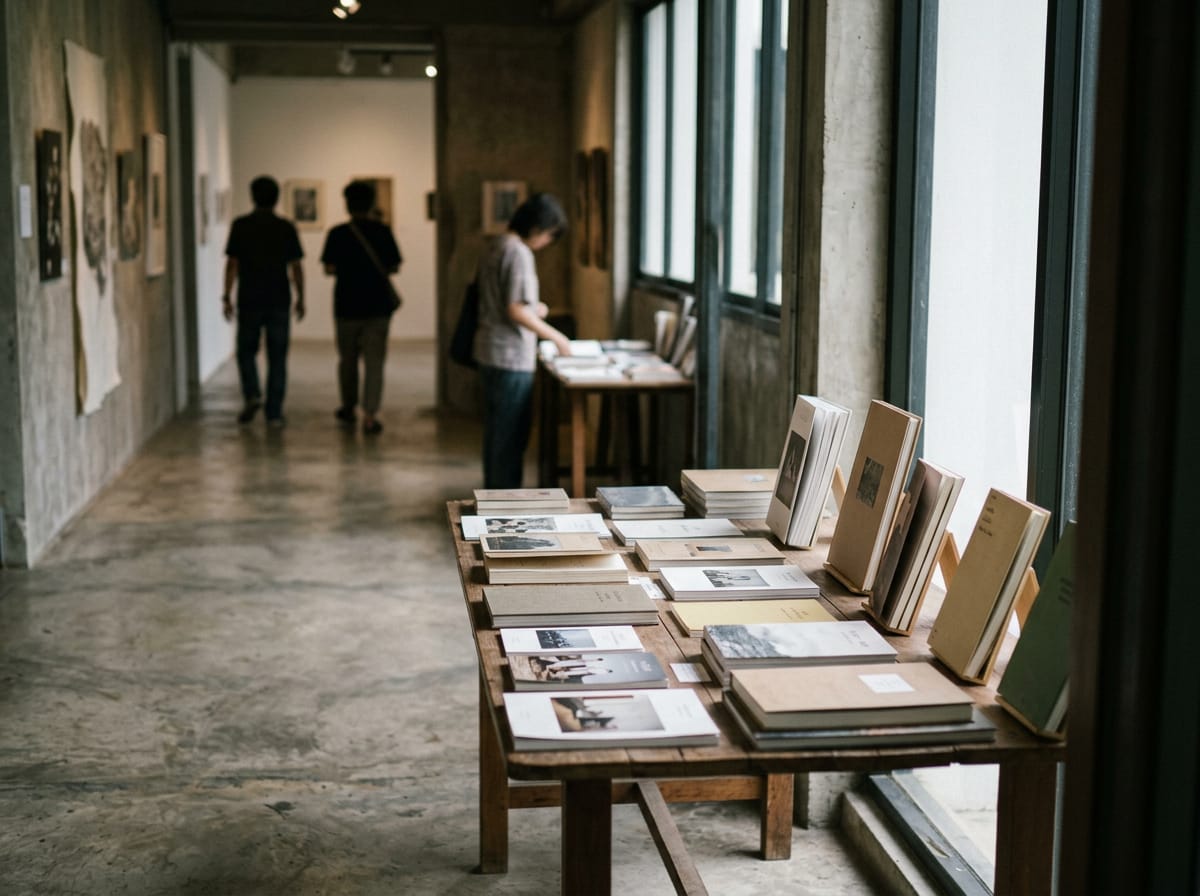
Photography without flash is welcomed throughout, with the exception of specific touring exhibitions that post no-photography signs at the entrance. Tripods are not permitted in the galleries. There is no dedicated café inside the Centre, but the south end of Nimmanhaemin holds more than 50 specialty coffee shops within a 10-minute walk; Ristr8to, Graph and Akha Ama are all within 500 metres. The building is air-conditioned and comfortable in the hot season, though the temperature can feel cool in late afternoon. Wheelchair access is good throughout, with ramps at the entrance and a lift to the second floor; accessible toilets are on the ground floor near the bookshop. The bookshop near the front desk sells catalogues and artist monographs at modest prices and is one of the better small contemporary-art bookshops in northern Thailand, particularly strong on northern Thai painting of the 1990s and 2000s. Free printed exhibition guides are available at the entrance, with the texts of the introductory wall panels reproduced for the current show. Check the Centre’s Facebook page before you go: between exhibitions the gallery is sometimes closed for installation for a week or two, and major Friday-evening openings draw the local art community and are worth timing a visit around.
Best time to visit
Weekday late mornings between 10:30 and 12:30 are the quietest hours and the best-lit, with the high overhead skylights at their strongest in the middle of the day. Saturday afternoons bring the Nimman foot traffic, which is the busiest single period of the week, particularly when a touring exhibition from Bangkok is on. Sunday afternoons are quieter than Saturdays and pair well with a late lunch at any of the surrounding Nimman cafés. The opening receptions for new exhibitions, usually on Friday evenings from 18:00, are open to the public and the best way to meet the local artistic community. Check the schedule for the next opening before you plan your visit, and arrive at 18:30 rather than 18:00 to skip the formal speeches. The hot season from March to May is comfortable inside the air-conditioned building; the cool season from November to February is pleasant throughout and aligns with the busiest exhibition schedule.
Nearby and combine with…
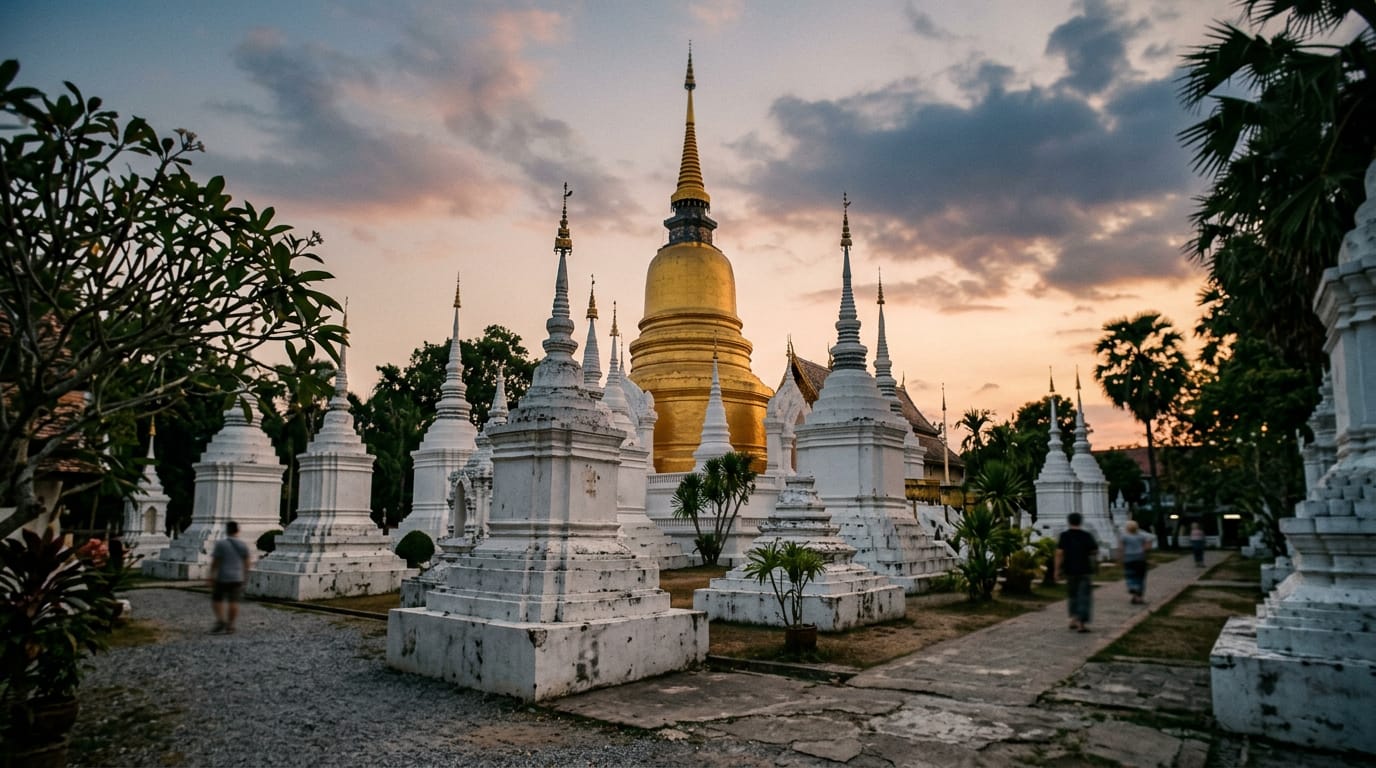
Wat Suan Dok, the fourteenth-century royal wat (temple-monastery) with its field of whitewashed chedi, the relic spires containing the ashes of the Chiang Mai ruling house, sits 900 metres east on Suthep Road and is the natural temple pairing for the Centre on a south-edge walking circuit. The Nimmanhaemin café district immediately to the north, particularly the streets between Soi 1 and Soi 17, is the obvious place to break the visit either side of the exhibition. The Chiang Mai City Arts and Cultural Centre on Three Kings Plaza, 4 km east in the Old City, is the civic-history counterpart for visitors who want some history alongside the contemporary work. For families with children who find the contemporary art programme too austere, the Museum of World Insects on Nimman Soi 13 is 700 metres north.
Photos
Frequently asked questions
What are the opening hours?
The Centre is open Tuesday to Sunday, 10:00 to 17:00, with last entry at 16:30. It is closed every Monday, on Thai public holidays and during the four days of Songkran in April. Between exhibitions the gallery is sometimes closed for installation for a week or two — always check the Centre's Facebook page for the current schedule before you make the journey. Opening receptions for new exhibitions usually take place on a Friday evening from 18:00.
How much is entry?
Entry to the permanent collection and rotating exhibitions is free for all visitors. Some special touring shows from major foreign institutions carry a ticket of 80 to 150 baht. Free entry is one of the strongest features of the Centre and reflects its status as an academic department rather than a commercial museum. There is no shop, café or audio-guide upsell.
Where is the Centre and how do I get there?
The Centre sits at the south-west corner of Nimmanhaemin Road and Suthep Road, on the south edge of Chiang Mai University's main campus. From the Old City a red songthaew costs 40 to 50 baht per person and takes 15 minutes via Suthep Road. A Grab car runs 90 to 110 baht. From Nimmanhaemin Soi 1 it is a 10-minute walk south down the main road. Park free in the small CMU forecourt opposite the building on Suthep Road. No public bus stops directly outside; the airport B2 bus passes the Nimman junction 600 metres north.
What exhibitions are on now?
The Centre runs three to five exhibitions a year, each lasting roughly two months. The programme mixes solo shows by established northern Thai contemporary artists, group exhibitions on regional or thematic subjects, faculty curatorial projects, graduation shows from the Faculty of Fine Arts, and occasional touring exhibitions from foreign institutions such as the Japan Foundation or the Goethe Institut. Check the Centre's Facebook page or the printed schedule at the entrance for the current programme.
Is there English signage?
Exhibition labels are usually bilingual Thai and English, although the quality of the English text varies with the curatorial team. The introductory wall panels at the start of each exhibition reliably carry English; smaller object labels sometimes do not. Catalogues are produced bilingually for major shows and are available free or at minimal cost at the entrance desk. Artist talks and lectures are sometimes in Thai only — check the language of the event before you attend.
How long does a visit take?
Allow 45 to 75 minutes depending on the scale and density of the current exhibition. A single solo show with thirty pieces takes around 45 minutes at an attentive pace; a graduation show with a hundred works across two floors takes closer to 90 minutes. The architectural quality of the building rewards slow walking even if you have only a passing interest in the current exhibition.
Can I take photographs?
Photography without flash is welcomed throughout the building. Some touring exhibitions specifically forbid photography for copyright reasons and post signs at the entrance — these are the exception. Tripods are not permitted in the galleries. The exterior of the building, the inner courtyard and the surrounding Nimmanhaemin streetscape are all popular photography spots. Phone photography for personal and social media use is welcomed.
Is there a café or shop?
There is no dedicated café inside the Centre. A small bookshop near the entrance sells exhibition catalogues, artist monographs, faculty publications and a small selection of Thai contemporary-art books. For coffee, the Centre sits at the south end of Nimmanhaemin, the densest café district in Chiang Mai, with more than 50 specialty coffee shops within a 10-minute walk. Ristr8to, Graph and Akha Ama are all within 500 metres.
Is the Centre suitable for children?
The Centre is a contemporary art space rather than a family museum. Older children with an interest in art will find the rotating exhibitions worthwhile; younger children may find the slower pace and the conceptual content less engaging than the Museum of World Insects 700 metres east on Nimman Soi 13. There is no dedicated children's programming. Faculty graduation shows in May and December are often the most accessible exhibitions for younger visitors.
Is the building wheelchair accessible?
The ground floor is fully accessible by ramps at the main entrance and between the gallery wings. A lift serves the second floor and the lecture room. Wheelchairs can be borrowed from the front desk on request. The surrounding Nimmanhaemin pavements are uneven in places but the immediate approach to the building is paved and flat. Accessible toilets are on the ground floor near the bookshop.
How is this different from the City Arts and Cultural Centre on Three Kings Plaza?
The two museums share a name family but cover entirely different ground. The City Arts and Cultural Centre on Three Kings Plaza is a civic-history museum about the city of Chiang Mai from the founding by King Mangrai in 1296 to the present, with permanent thematic rooms on Lanna history and daily life. The CMU Art Centre at Nimman is a contemporary art space with rotating exhibitions and no fixed permanent collection. Different audiences, different days out.
Related guides
Temple
Wat Suan Dok
Wat Suan Dok, the 'Flower Garden Temple', sits outside the western moat on Suthep Road. Founded in 1370 by King Kuena to house a relic later carried up Doi Suthep by a white elephant, it is best known for its cluster of whitewashed royal chedis (the cremation memorials of the Mangrai dynasty) and for weekday Monk Chat sessions with novice monks.
Museum
Chiang Mai City Arts and Cultural Centre
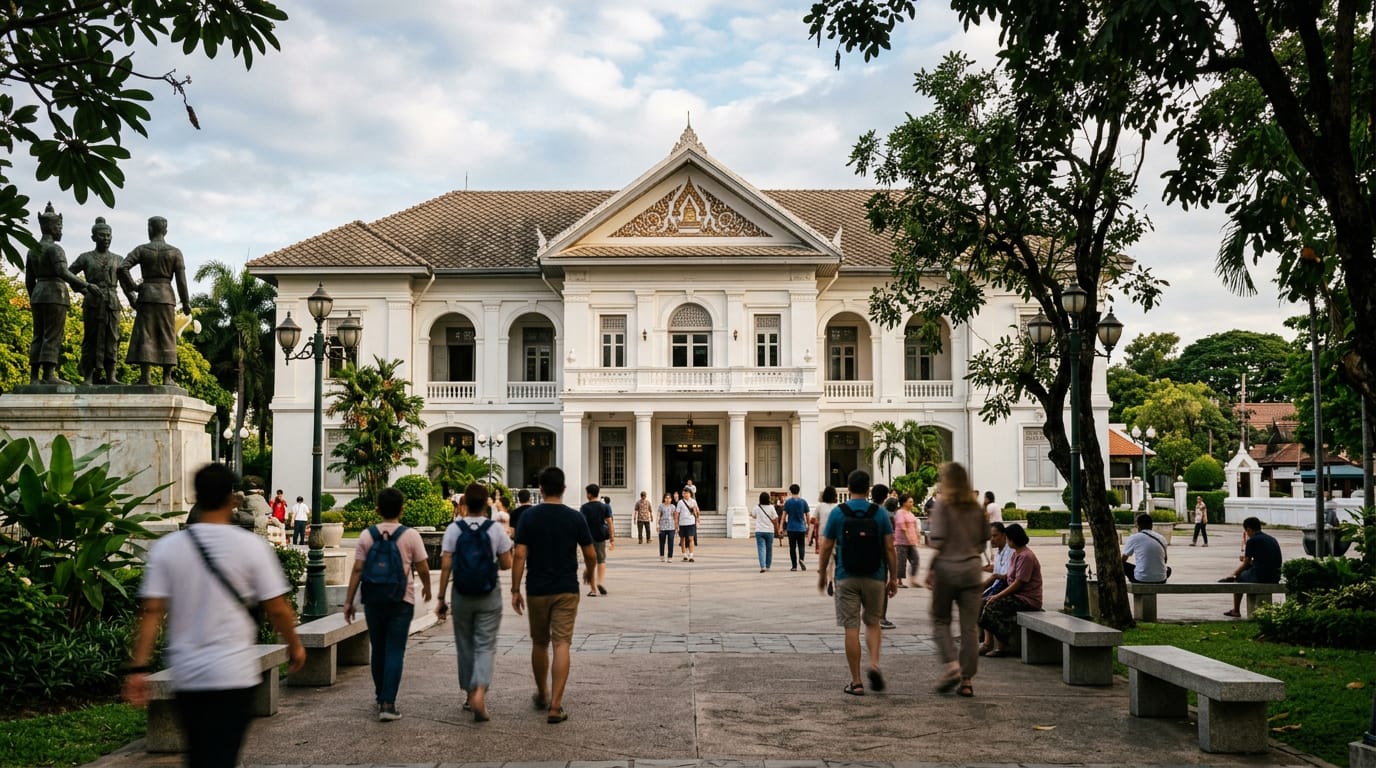
The City Arts and Cultural Centre occupies the restored 1924 colonial provincial hall on Three Kings Plaza, directly facing the monument to King Mangrai and his two royal allies. Fourteen thematic rooms run from the founding of Chiang Mai in 1296 through the Burmese occupation and the Siamese reunification to modern daily life, costume and religion. With the adjacent Lanna Folklife Museum and the Historical Centre behind it, the plaza forms the city's principal museum district.